SESSIONS & ENVIRONMENTS
Altitude tent or IHHT: how the two compare
An altitude tent lowers the oxygen you breathe while you sleep. Most users set it between 8,000 and 15,000 ft, roughly 15% to 12% oxygen. IHHT uses the same idea differently, in a short seated session.
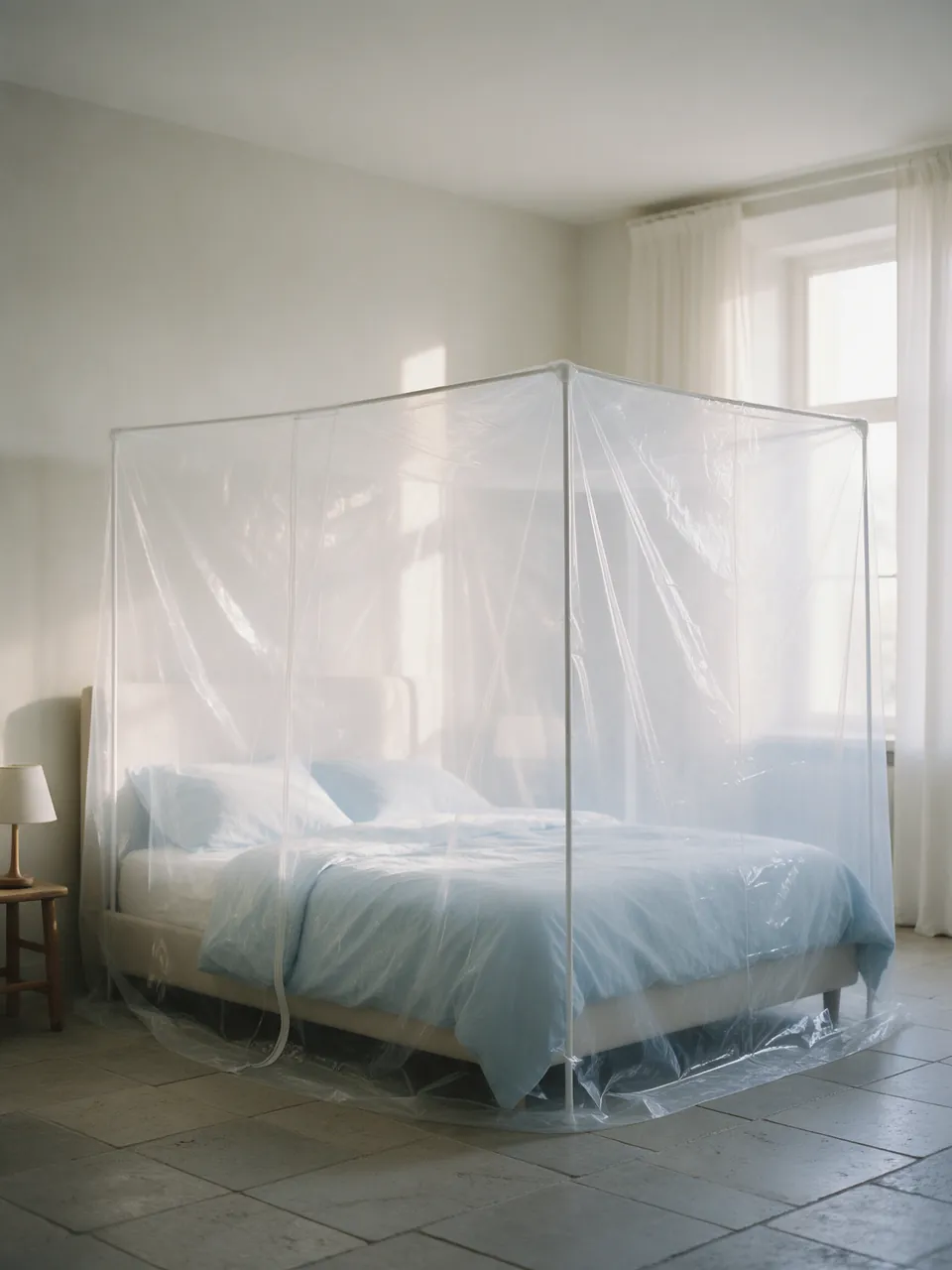
What an altitude tent is and how it works
An altitude tent is a sealed enclosure over a bed that a generator fills with air at normal pressure but lower oxygen. An altitude tent allows an athlete to acclimate by sleeping in reduced oxygen while air pressure stays the same. People also call it a hypoxic tent or an altitude training tent.
A generator draws in room air, lowers the oxygen percentage, and sends it through tubing into the enclosure. The hose can be long enough to put the generator in another room to reduce noise. Normal room air is 20.9% oxygen, while tent air can be as low as about 12%. Real mountains are hypobaric, with 21% oxygen in thinner air, but most hypoxic tents are normobaric, with normal air density and some oxygen replaced by nitrogen.
If air exchange is too low, then carbon dioxide, heat, and humidity build up inside. These enclosures have little ventilation, often clear plastic windows, and displaced air escapes through seams and zippers.
Tent types and sizes
Small tents sit on the bed, while larger cube tents stand on the floor around the whole bed. Published options include a small head tent, bed tents for twin to king beds, and standing-height cube tents. A queen bed tent measures 82 by 62 by 51 inches with the mattress inside, and it reaches the set altitude in about 30 minutes.
Who uses one, from runners to climbers
Endurance athletes sleep in a hypoxic tent to live high and train low, and climbers use one to pre-acclimatize at home before a high trip. The live high, train low approach means sleeping in low oxygen but training in normal air so workouts keep their intensity.
Runners use a tent mainly to prepare for races at altitude, and for running a system that reaches 10,000 ft is enough. One climber spent 23 nights in a torso-sized tent while living at 800 m, rising about 200 m per night to nearly 4,000 m simulated. The rationale is that altitude exposure raises red blood cell and hemoglobin production over weeks. In 2006, the World Anti-Doping Agency decided it was not appropriate to ban altitude tents.
Simulated altitude, oxygen levels, and hours per night
Most athletes sleep at a simulated 8,000 to 15,000 ft for 7 to 10 hours a night, aiming for blood oxygen saturation near 90%. Sleeping at high altitudes can easily be simulated with a generator that lowers oxygen at normal pressure. The table below shows the oxygen level at common settings.
| Simulated altitude | Oxygen |
|---|---|
| Sea level | 20.9% |
| 5,000 ft (1,524 m) | 17.3% |
| 8,000 ft (2,438 m) | 15.4% |
| 10,000 ft (3,048 m) | 14.3% |
| 12,000 ft (3,658 m) | 13.2% |
| 15,000 ft (4,572 m) | 11.8% |
One manufacturer recommends 8 or more continuous hours per night. A minimum of 4 weeks is typical, with maximum adaptation after about 8 weeks, and adaptation begins to fade about 5 days after stopping. When an event is close, athletes may stop 1 to 4 nights before it. The tent is used only during sleep, so the routine fits around your day, but there is no official protocol for how many nights you need.
How to acclimatize in a high altitude tent
Acclimatizing in a high altitude tent works best when you start low, near 5,000 ft, and raise the setting gradually only after nights of good sleep. The rule is to increase your altitude over time with a stepwise protocol instead of jumping high on the first nights.
- Start at about 5,000 ft if you live near sea level.
- Raise about 500 ft per night, and hold the setting if sleep is poor.
- Alternatively, raise about 1,000 ft every 3 to 5 days.
- Aim for a morning SpO2 of about 90% to 94%, checked with a pulse oximeter.
- Skip or lower a night after very hard training.
One runner reported that +500 ft per night from 5,000 ft was too fast, so she slowed to +500 ft every 3 to 4 nights. If sleep quality drops, then hold the previous night's altitude. Most sea-level athletes sleep no higher than about 9,000 to 10,000 ft, while mountaineers may sleep at 12,000 ft and above.
Heat, noise, and sleep quality
Heat, humidity, and condensation can build up in warm rooms, and one runner found that air conditioning, a fan, and a mattress cooler were not enough on 90°F nights. Generator noise is around 60 to 65 dB, comparable to a window air conditioner, and power draw is 550 to 650 W. The same runner found that her partner could not sleep in the tent. One climber described an unsecured tent pole that made the enclosure collapse overnight. A retailer advises people with heart or lung conditions, blood disorders, diabetes, high blood pressure, epilepsy, kidney disease, or pregnancy to get a doctor's clearance first.
Cost, generators, and rental
Most of the cost is the generator: tent shells cost about $260 to $950, entry generators start around $1,940, and mid-range models around $4,595. Most setups pair a tent shell with a generator, sold separately or as a sleep package. Published prices are summarized below.
| Item | Published price |
|---|---|
| Tent shell only | $260 to $950 |
| Generator only | from about $1,940 (entry) to $4,595 (mid-range) |
| Complete sleep system from one retailer | $2,925 to $3,025 |
| One-person kit with head tent and oximeter | about $2,161 |
An older reference price from 2013 was about $4,000 or more to buy, or $400 per month to rent. Rental usually runs in weekly increments with a 4-week minimum and 4 to 8 weeks recommended, and up to 8 weeks of rental can be applied to a buyout. Two-way ground shipping averages $150 to $250. If you need the setup for only a few weeks before one trip, then renting can cost less than buying.
An IHHT system is a different category with a different price. See the full altitude training equipment cost breakdown for context.
What the research says about hypoxic tents
Research on hypoxic tents is mixed: studies have reported better sleep oxygen and less mountain sickness on waking, but not better cycling power. The benefit depends on dose, the people studied, and the outcome measured.
Fulco et al. 2011 had 14 unacclimatized sea-level residents sleep 7.5 hours per night for 7 nights at 16.2% to 14.4% oxygen, equivalent to 2,200 to 3,100 m, compared with 9 on sham. At 4,300 m, sleep oxygen saturation was higher (80% vs 76%) and acute mountain sickness scores on waking were lower, with no other rest, sleep, or exercise differences.
Bejder et al. 2017 was a double-blind, placebo-controlled crossover with 7 highly trained triathletes over 6 weeks of tent live high, train low at 8 hours per day. It found no change in incremental peak power, a roughly 26-km time trial, a 3-minute all-out test, or 30-second repeated sprints.
One exercise physiologist noted that a tent needs about 3 or more weeks at 12 or more hours per day to change ventilation, and that tent exposure is unlikely to raise hemoglobin mass. Real altitude may be more effective than a tent for pre-acclimatization. For related intermittent protocols, see the research on intermittent hypoxia.
Hypoxic tent vs IHHT sessions
A hypoxic tent holds one reduced oxygen level for hours overnight, while IHHT alternates reduced-oxygen and oxygen-enriched air in a seated session at rest. Tent studies measure overnight exposure, so their results do not transfer to IHHT protocols.
| Feature | Hypoxic tent | IHHT |
|---|---|---|
| Delivery | Generator feeds a sealed enclosure | Mask breathing |
| Exposure pattern | One level for hours | Alternating reduced-oxygen and oxygen-enriched air |
| Place in routine | Overnight sleep | Seated or reclining session at rest |
| Space | Bed-sized enclosure | No bed enclosure needed |
| Time commitment | 7 to 10 hours per night for 4 or more weeks | A dedicated session at rest |
| What to verify | Generator noise and power | Session protocol and mask fit |
Learn what an IHHT machine is and how an IHHT session works. Superhuman Altitude is an IHHT system and is not sold as a tent generator. The Superhuman Altitude system costs $14,900 for one system plus four masks, comes in White or Matte black, ships worldwide in about 14 days with shipping invoiced separately, and carries a two-year basic warranty.
Frequently asked questions
How much does an altitude tent cost?
Tent shells cost about $260 to $950, and generators start around $1,940. A complete one-person kit has been reported at about $2,161. Renting is an alternative if you need it for only a few weeks.
Do altitude tents really work?
Studies have reported better sleep oxygen and less mountain sickness on waking, but a placebo-controlled trial found no change in cycling power. Results depend on dose, the people studied, and the outcome measured.
How many hours a night should you sleep in one?
Typically 7 to 10 hours per night, and one manufacturer recommends 8 or more continuous hours. A minimum of 4 weeks is common, with maximum adaptation after about 8 weeks.
Can you rent an altitude tent?
Yes. Rentals are commonly weekly with a 4-week minimum and 4 to 8 weeks recommended. Up to 8 weeks of rental can be applied to a buyout, and two-way shipping averages $150 to $250.
Is a tent worth it for runners?
It depends on your goal and budget. Runners preparing for a race at altitude may benefit from pre-acclimatization, while a trial in trained triathletes found no sea-level performance gain. Generator noise and heat can also affect sleep.
Are hypoxic tents legal in sport?
In 2006, the World Anti-Doping Agency said it was not appropriate to ban them.
Is it the same as a high altitude camping tent?
No. A mountain camping tent is a shelter, while a hypoxic tent is a sealed indoor enclosure fed by a hypoxic air generator.
Last reviewed November 2026.
SUPERHUMAN ALTITUDE
Meet the system.
Explore the product, the experience, and the next step.
$14,900 USD
Explore Altitude