EXERCISE & OXYGEN
EWOT vs IHHT, explained
EWOT means exercising while breathing oxygen-enriched air. A typical EWOT session lasts about 15 minutes on air near 90% oxygen, versus 21% in room air. IHHT instead alternates low and high oxygen while you rest.
Written by the Superhuman Altitude team. General information, not medical advice.
What is EWOT (exercise with oxygen therapy)
EWOT, short for exercise with oxygen therapy, means doing light to moderate cardio while breathing oxygen-enriched air through a mask. Exercise with oxygen therapy pairs a cardio workout with a mask that delivers concentrated oxygen, so the extra oxygen arrives while demand is high. Exercise raises heart rate, cardiac output and blood flow, and the extra oxygen raises the oxygen fraction of each breath. Room air is about 21% oxygen, while EWOT setups deliver concentrations reported at about 92 to 98%.
You can find it both as a home kit and as a paid session in wellness clinics. People comparing oxygen methods often put it next to IHHT, which works at rest with alternating oxygen levels instead.
How a session works
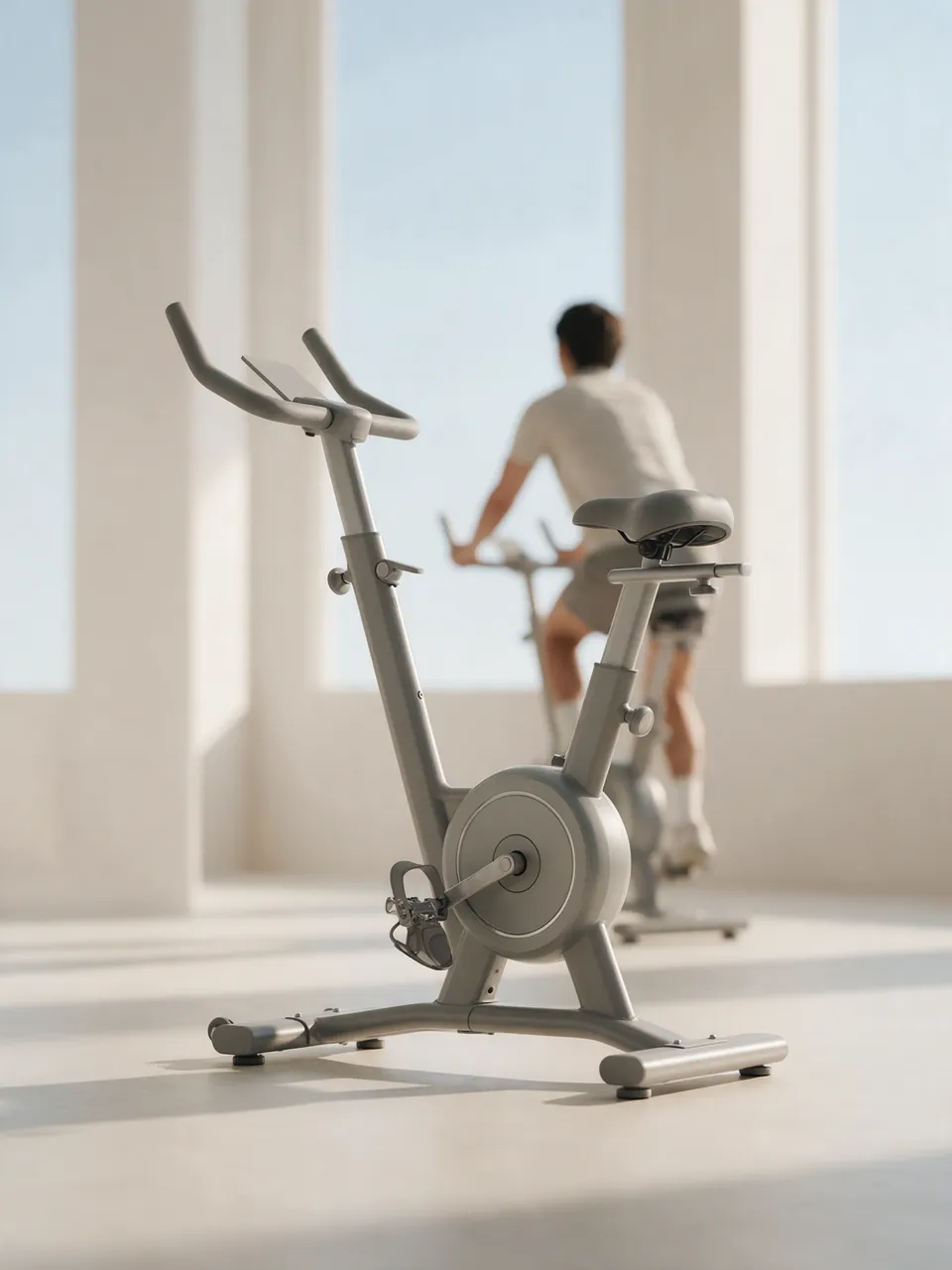
A typical EWOT session is about 15 minutes on a stationary bike, treadmill or elliptical while breathing air that is roughly 90% oxygen or more. Most sessions are short and built around steady cardio on a bike or treadmill. Oxygen concentrators keep the delivered gas at roughly 90% oxygen or higher, well above the 21% in room air.
Sellers commonly recommend 3 to 5 sessions a week, which is a seller protocol and not a research result. Clinics that offer it monitor heart rate and oxygen saturation during the session.
A simple session looks like this:
- Fill the reservoir bag from the concentrator
- Put on the mask and check the seal
- Exercise at a comfortable pace for about 15 minutes
- Remove the mask and cool down
What equipment you need
An EWOT system includes an oxygen concentrator, a large reservoir bag, a sealed mask with tubing, and an exercise machine. A home kit is mostly a concentrator, a reservoir bag and a sealed mask plugged into a standard outlet.
Oxygen concentrator
A concentrator works by pressurizing room air through zeolite beds that hold back nitrogen, so it needs only a power outlet and no oxygen tanks. Home concentrators supplied up to 5 L/min of 90%+ oxygen, and units capable of up to 10 L/min have been available since about 1999. Concentrators are considered less dangerous than oxygen cylinders, which can greatly increase fire combustion if ruptured or leaking.
Reservoir bag
Consumer EWOT reservoirs hold about 900 to 1,000 liters. A 10 L/min concentrator fills a 1,000-liter reservoir in about 90 minutes, while a 5 L/min unit takes about 3 hours. The bag stores oxygen ahead of the workout, so the concentrator does not have to match every breath in real time.
EWOT mask
A medical non-rebreather mask with a one-way valve and a 1-liter reservoir delivers about 60 to 90% oxygen. A poor face seal lets room air dilute the oxygen, and inspiratory flows above 50 L/min increase that dilution.
Seller list prices put complete home kits at about $1,900 to $3,000, refurbished 10 L/min concentrators at about $800 to $900, new units at about $1,700 to $2,300, and single clinic sessions around $50 for 15 minutes.
EWOT benefits and what the research shows
The proven EWOT benefit is better performance while you breathe the extra oxygen, but lasting training or health benefits have not been shown. Extra oxygen helps while you breathe it, but lasting training effects remain unproven.
Sellers list benefits such as energy, recovery, endurance, circulation and focus, and those are claims rather than established outcomes. In one study, Ulrich et al. 2017 ran 32 healthy volunteers in a blinded crossover; breathing 50% oxygen versus 21% raised peak cycling power from 257 to 270 W, extended constant-load endurance from about 10 min 47 s to 16 min 22 s, and raised SpO2 from 96% to 99%.
A 2018 meta-analysis by Mallette et al. of 51 studies found that hyperoxia increases acute exercise performance, that an inspired oxygen fraction of 30% or more was enough to improve performance, and that the largest effect was on time to exhaustion (g = 0.89), with a smaller effect on time trials (g = 0.56). The same meta-analysis found that effects of oxygen-supplemented training and recovery trended positive, but large variability and limited research prevented a definitive conclusion.
Claims that EWOT treats or prevents diseases are not supported by peer-reviewed evidence, and even one provider page states that broader claims about it for serious conditions cannot be verified with independent clinical research. You can read more about the research behind IHHT for a parallel look at the evidence base.
EWOT dangers and safety cautions
The main EWOT dangers are fire, overexertion and skipping medical advice, because short sessions at normal pressure stay far below exposures linked to oxygen toxicity. A 15-minute session sits far below the hours of exposure linked to oxygen toxicity.
Pulmonary oxygen toxicity occurs only above an oxygen partial pressure of 0.5 bar, about 50% oxygen at sea level, with the earliest signs after 4 to 22 hours of breathing over 95% oxygen. Oxygen is not flammable, but concentrated oxygen greatly increases fire intensity, and smoking, candles and cooking are common ignition sources near home oxygen.
Cautions worth following:
- Keep the equipment away from smoking, open flames and cooking
- Watch for dizziness, lightheadedness, shortness of breath or an unusually high heart rate, and reduce intensity if they appear
- Get medical clearance if you have a cardiovascular condition
- Talk to a physician first if you have a heart or lung condition, are pregnant, or cannot exercise safely
Oxygen therapy is not recommended for people with pulmonary fibrosis or bleomycin-associated lung damage.
EWOT vs IHHT compared side by side
EWOT is oxygen added during exercise, while IHHT alternates reduced-oxygen and oxygen-enriched air while you sit or recline. The core difference is that one is a workout and the other is a resting session.
| Feature | EWOT | IHHT |
|---|---|---|
| What you do | Light to moderate cardio | Sit or recline at rest |
| Air pattern | Steady oxygen-enriched air | Alternating low and high oxygen |
| Oxygen levels | About 90%+ via concentrator and reservoir | FiO2 0.10 to 0.12 hypoxic and 0.30 to 0.40 hyperoxic in studies |
| Typical session | About 15 minutes | About 35 to 63 minutes in studies, with 2 to 6 min low-oxygen and 1 to 4 min high-oxygen phases |
| Equipment | Concentrator, reservoir bag, mask, exercise machine | Alternating-oxygen device and mask |
| What research measured | Acute exercise performance | Exercise tolerance, peak oxygen uptake, cognitive function in small studies |
HBOT is a third option: it uses a pressurized chamber at rest with sessions often around 90 minutes, compared with EWOT at normal pressure for about 15 minutes. You can read how IHHT compares with hyperbaric oxygen.
On IHHT evidence, Behrendt et al. 2022 screened 1,085 articles and found 8 controlled studies, with findings that included improvements in exercise tolerance, peak oxygen uptake and cognitive function, mostly in older patients. Bayer et al. 2017 studied 34 geriatric patients aged 64 to 92 in a 5 to 7 week rehab program, and adding IHHT improved 6-minute walk distance by 24.1% versus 10.8% with rehab alone. These are small studies in specific populations, so read them as protocol research rather than proof for every user. See how an IHHT session works for the format.
How to choose between the two
The choice depends on activity first, because EWOT is a workout and IHHT is a resting session, and research on one does not transfer to the other. If you want oxygen support during cardio, then exercise with oxygen fits that format.
If you cannot or prefer not to exercise during the session, then IHHT is done seated or reclining. If a study used a protocol different from your device, then its results may not apply to your setup. If you have a medical condition, then ask a physician first. If you want to compare the pressurized option too, then read the HBOT comparison before deciding.
Superhuman Altitude is an IHHT system, with sessions done seated or reclining at rest through a mask alternating reduced-oxygen and oxygen-enriched air. It costs $14,900 for one IHHT system plus four masks, comes in White or Matte black, ships in about 14 days worldwide with shipping invoiced separately, and carries a two-year basic warranty. You can see what an IHHT machine includes or view the Superhuman Altitude IHHT system.
This article is general information, not medical advice. Talk to a physician before starting any oxygen or exercise protocol, especially if you have a heart or lung condition.
Frequently asked questions
Does EWOT really work?
Extra oxygen improves performance while you breathe it. Ulrich et al. 2017 found higher peak power and longer endurance on 50% oxygen, and a 2018 meta-analysis found hyperoxia increases acute exercise performance. Lasting training or health benefits remain unproven.
Is EWOT safe?
Short sessions at normal pressure are far below oxygen toxicity thresholds. The main practical risks are fire and overexertion. Ask a physician first if you have a heart or lung condition or are pregnant.
Can you do it at home?
Yes. Home kits use a concentrator, reservoir bag and mask plugged into a standard outlet. Seller list prices run about $1,900 to $3,000 for a complete kit. Keep the equipment away from flames and cooking.
Does it increase VO2 max?
Oxygen raises performance during the test itself. Evidence that this kind of training raises VO2 max afterward is limited and inconclusive.
Is it as good as HBOT?
The two differ in pressure, rest versus exercise, and duration, about 90 minutes for HBOT versus about 15 for an oxygen workout. They are not interchangeable. See how IHHT compares with hyperbaric oxygen; our sister brand Superhuman Chambers covers HBOT.
Which is better for endurance athletes?
There is no head-to-head trial. One adds oxygen during training, while IHHT exposure is done at rest with low and high oxygen phases. Choose by format and by the evidence for your population.
How long is a session?
About 15 minutes, often 3 to 5 times a week according to seller protocols. IHHT sessions in studies lasted about 35 to 63 minutes.
Last reviewed November 2026.
SUPERHUMAN ALTITUDE
Meet the system.
Explore the product, the experience, and the next step.
$14,900 USD
Explore Altitude